Within Complexity
Why Some LEGO Failures Left More Waste
Specialised pieces and non-standard assumptions made failed experiments harder to absorb than ordinary brick-based misses.
On this page
- How specialised elements raise downside
- Why reusable parts protect learning
- What standard bricks made safer
Page outline Jump by section
Introduction
LEGO’s early-2000s crisis exposed a specific weakness that went beyond having too many products. The company had increasingly filled sets with specialised elements designed for narrow purposes, unique moulds, unusual shapes or pieces tied closely to a single theme. When those products failed, the losses did not stay contained within one disappointing launch. They spread into manufacturing, inventory, forecasting and tooling costs. What looked like creativity on the shelf often created fragility behind the scenes.
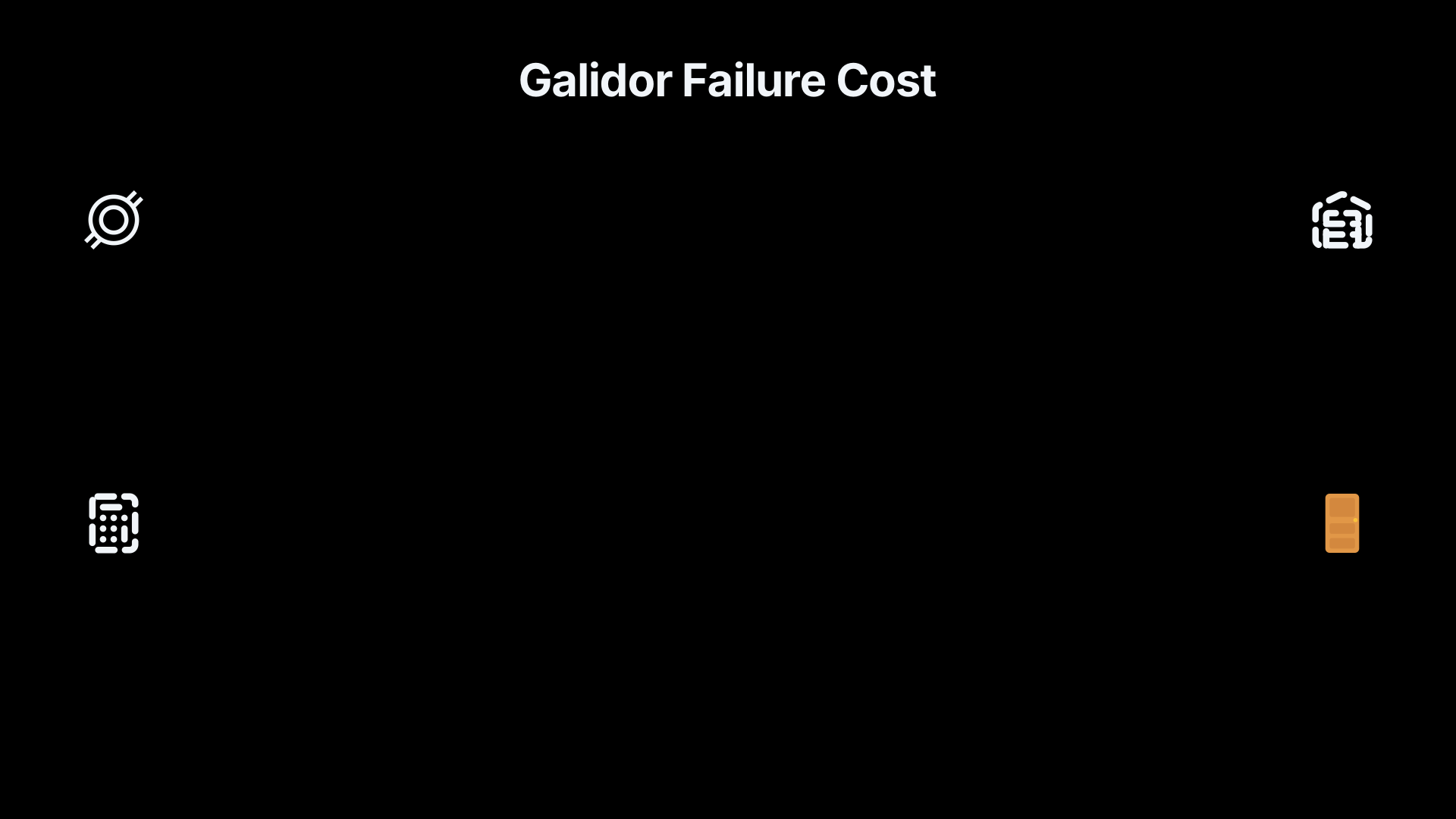 This mattered because LEGO’s traditional strength was not merely inventing new sets. Its strength was a reusable building system. Standard bricks could migrate across themes, years and markets. A failed castle, city or space set still left behind parts that could be used elsewhere. A failed product built around highly specialised components often left behind assets with little value outside that specific experiment. In antifragility terms, reusable bricks allowed LEGO to learn from mistakes cheaply; specialised pieces made mistakes more expensive. LEGO[Strategy]strategy-business.comStrategy+businessRebuilding Lego, Brick by Brick29 Aug 2007 — The Lego Group had lost money four out of the seven years from 1998 through…[business]strategy-business.comStrategy+businessRebuilding Lego, Brick by Brick29 Aug 2007 — The Lego Group had lost money four out of the seven years from 1998 through…
How Specialised Elements Raised the Downside
The hidden cost of a specialised LEGO part began long before a set reached stores.
Every new element required design work, engineering validation, mould creation, manufacturing planning and inventory management. A standard brick already existed within the system. A specialised element created a new obligation that LEGO had to support throughout production and distribution. When multiplied across thousands of parts, these obligations became a major operational burden.[historyforoperators.substack.com]historyforoperators.substack.comHow LEGO Nearly CollapsedLEGO needed to standardize and cut down its part library dramatically. Knudstorp set an initial target to halve the number of active piec…[2secondactsbiz.substack.com]secondactsbiz.substack.comThe Turnaround - Second ActsIn the early 2000s, Lego had over 12,000 different brick types, which resulted in inefficiencies in manufactu…
The risk became especially severe when a piece had only one intended use.
A generic 2x4 brick can appear in hundreds of products over decades. A custom wing, creature head, vehicle shell or theme-specific decorative piece may only make sense within a single product line. If consumer demand disappoints, LEGO cannot easily redirect that inventory into future sets. The company is left carrying the cost of moulds, warehousing and unsold stock with fewer opportunities for recovery.[historyforoperators.substack.com]historyforoperators.substack.comHow LEGO Nearly CollapsedLEGO needed to standardize and cut down its part library dramatically. Knudstorp set an initial target to halve the number of active piec…[2Repositório UCP]repositorio.ucp.pt152118010 Adrian Geislinger DPDFARepositório UCPHow Lego rebuilt and became the top toymaker in the world.23 Oct 2020 — He reduced the number of individual pieces produce…
Several former analyses of the turnaround period describe a startling discovery inside LEGO’s design system: large numbers of active elements were being used only once or in extremely limited contexts. The issue was not simply the total number of pieces. It was the low reusability of many of them. Each additional specialised part increased complexity while contributing little flexibility to the wider system.[historyforoperators.substack.com]historyforoperators.substack.comHow LEGO Nearly CollapsedLEGO needed to standardize and cut down its part library dramatically. Knudstorp set an initial target to halve the number of active piec…
This changed the economics of experimentation. A failed set built mostly from common bricks could still contribute useful inventory to future products. A failed set dependent on unique moulded elements could leave behind stranded assets.
Why Reusable Parts Protected Learning
Most companies learn through trial and error. Antifragile systems make those errors cheap enough that experimentation becomes sustainable.
For LEGO, standardised parts historically served exactly that function. The company could launch new themes, stories or play concepts without redesigning the physical building system each time. Even if a theme disappeared after one year, many of its components remained valuable because they were compatible with future sets.
This created a form of downside protection. A failed pirate set, for example, might leave behind bricks, plates, windows or structural elements that could later appear in city, castle or creator products. The inventory retained value because the building language remained shared across themes.
Specialised pieces weakened this protection. Once a product depended on unique sculpted parts, highly specific moulds or unusual colours, LEGO lost some of the recycling effect that had historically made experimentation affordable. The lesson from a failed launch became more expensive because the physical assets attached to that lesson were harder to reuse.[secondactsbiz.substack.com]secondactsbiz.substack.comThe Turnaround - Second ActsIn the early 2000s, Lego had over 12,000 different brick types, which resulted in inefficiencies in manufactu…[2historyforoperators.substack.com]historyforoperators.substack.comHow LEGO Nearly CollapsedLEGO needed to standardize and cut down its part library dramatically. Knudstorp set an initial target to halve the number of active piec…
That distinction is important. The issue was not that LEGO should never create new elements. Many successful themes depend on specialised parts. The problem emerged when the balance shifted too far away from system-wide reuse and towards one-off solutions.
An antifragile product architecture benefits when failures generate knowledge without destroying resources. Reusable bricks helped achieve that. One-off components reduced the amount of value that could survive a failed experiment.

Galidor as a Warning Sign
One of the clearest examples was the Galidor line introduced in 2002.
Galidor moved away from LEGO’s traditional brick-based construction model. Rather than encouraging building through a broadly reusable system of interlocking elements, it relied heavily on large character-specific components and a different play concept. The line failed commercially and has often been cited as one of the company’s major missteps during the crisis years.[Springer]link.springer.comUltimate LEGO Worldbuilding and Architecture - Springer NatureOh, there was also Spybiotics and then the big fail of Galidor, whi…
The significance of Galidor was not only poor sales. It represented a product architecture that sat outside LEGO’s core strengths.
When a traditional LEGO theme struggles, the company can still preserve value through reusable parts, compatible inventory and accumulated building knowledge. When a line is built around unique assumptions, those buffers become weaker. The failure becomes more isolated and therefore more costly.
Galidor demonstrated how moving away from the common brick system increased the consequences of getting a product bet wrong. The company was no longer simply testing a new story or theme. It was testing a different physical system with fewer recovery options if demand failed to appear.
Why Complexity Spread Beyond the Brick
Specialised elements also created secondary costs throughout the organisation.
Each additional part number increased forecasting difficulty. Supply-chain teams had to estimate demand for more unique components. Manufacturing operations faced more moulds, more production planning and more inventory tracking. Retailers received more variations of products that might or might not sell. When forecasts were wrong, the consequences spread across warehouses and distribution networks.[Strategy]strategy-business.comStrategy+businessRebuilding Lego, Brick by Brick29 Aug 2007 — The Lego Group had lost money four out of the seven years from 1998 through…[business]strategy-business.comStrategy+businessRebuilding Lego, Brick by Brick29 Aug 2007 — The Lego Group had lost money four out of the seven years from 1998 through…[studocu]studocu.comLEGO Case Study: Navigating the Crisis and Strategic…Why had complexity and costs risen so dramatically and made so many produc… The problem became visible during LEGO’s broader crisis. By the early 2000s, the company was managing enormous numbers of product permutations while struggling with inventory imbalances and profitability questions. Executives later concluded that complexity itself had become a major source of cost.[Strategy]strategy-business.comStrategy+businessRebuilding Lego, Brick by Brick29 Aug 2007 — The Lego Group had lost money four out of the seven years from 1998 through…[business]strategy-business.comStrategy+businessRebuilding Lego, Brick by Brick29 Aug 2007 — The Lego Group had lost money four out of the seven years from 1998 through…[LEGO]lego.comAnnual Report 2004 ENGAnnual Report 2004 LEGO GroupApril 26, 2005 — In addition, the. Group is working to reduce its lead times and inventories. The produc…
Specialised parts amplified this effect because they created complexity that could not easily be shared across the wider system. A standard brick supports many products at once. A niche component supports only a narrow slice of the catalogue while still demanding attention from factories, planners and logistics teams.
What Standard Bricks Made Safer
The turnaround under Jørgen Vig Knudstorp involved reducing the number of active elements and refocusing on the core building system. Multiple accounts describe LEGO cutting thousands of unique parts and aggressively simplifying the portfolio. Estimates commonly place the reduction from roughly 13,000 active elements to around 6,500. Repositório UCP[The Guardian]theguardian.comhow lego clicked the super brand that reinvented itselfHe slashed the inventory, halving the number of individual pieces Lego produces from 13,000 to 6,500.Read more…
The goal was not to eliminate creativity. It was to make creativity operate within stronger constraints.
A standard brick delivers several advantages simultaneously:
- It can appear in many themes and product generations.
- Inventory remains useful even if one set underperforms.
- Manufacturing can operate at larger, more efficient volumes.
- Designers inherit a shared library rather than constantly creating new components.
- Product failures become less destructive because fewer assets are tied to a single outcome.
This helps explain why LEGO’s recovery was not merely a financial restructuring story. It was also a redesign of the company’s learning system. By relying more heavily on reusable elements, LEGO made experimentation safer. Successful ideas could scale through the system, while unsuccessful ideas produced smaller losses.
From an antifragility perspective, that shift mattered because it changed the cost of failure itself. Standard bricks allowed mistakes to remain informative. Specialised parts increasingly made mistakes expensive. The more LEGO returned to a shared, reusable building language, the easier it became to absorb setbacks without threatening the wider organisation.

Amazon book picks
Further Reading
Books and field guides related to Why Some LEGO Failures Left More Waste. Use these as the next step if you want deeper reading beyond the article.
Antifragile: Things That Gain from Disorder
Explains why reusable options reduce downside risk.

Brick by Brick: How LEGO Rewrote the Rules of Innovation and...
Covers the cost of excessive specialised components.
eBay marketplace picks
Marketplace Samples
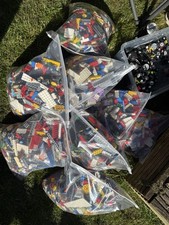
Example marketplace items related to this page. Use the search link to explore similar finds on eBay.


Endnotes
1.
Source: lego.com
Title: Annual Report 2004 ENG
Link:https://www.lego.com/cdn/cs/aboutus/assets/blt07abb4b8a3da3f39/Annual_Report_2004_ENG.pdf
Source snippet
Annual Report 2004 LEGO GroupApril 26, 2005 — In addition, the. Group is working to reduce its lead times and inventories. The produc...
Published: April 26, 2005
2.
Source: studocu.com
Link:https://www.studocu.com/en-za/document/university-of-pretoria/business-management/lego-case-study/32108564
Source snippet
LEGO Case Study: Navigating the Crisis and Strategic...Why had complexity and costs risen so dramatically and made so many produc...
3.
Source: historyforoperators.substack.com
Title: How LEGO Nearly Collapsed
Link:https://historyforoperators.substack.com/p/the-lego-turnaround
Source snippet
LEGO needed to standardize and cut down its part library dramatically. Knudstorp set an initial target to halve the number of active piec...
4.
Source: secondactsbiz.substack.com
Link:https://secondactsbiz.substack.com/p/lego-the-turnaround
Source snippet
The Turnaround - Second ActsIn the early 2000s, Lego had over 12,000 different brick types, which resulted in inefficiencies in manufactu...
5.
Source: repositorio.ucp.pt
Title: 152118010 Adrian Geislinger DPDFA
Link:https://repositorio.ucp.pt/bitstream/10400.14/31148/1/152118010_Adrian%20Geislinger_DPDFA.pdf
Source snippet
Repositório UCPHow Lego rebuilt and became the top toymaker in the world.23 Oct 2020 — He reduced the number of individual pieces produce...
6.
Source: link.springer.com
Link:https://link.springer.com/content/pdf/10.1007/979-8-8688-0521-9.pdf
Source snippet
Ultimate LEGO Worldbuilding and Architecture - Springer NatureOh, there was also Spybiotics and then the big fail of Galidor, whi...
7.
Source: strategy-business.com
Link:https://www.strategy-business.com/article/07306
Source snippet
Strategy+businessRebuilding Lego, Brick by Brick29 Aug 2007 — The Lego Group had lost money four out of the seven years from 1998 through...
8.
Source: theguardian.com
Title: how lego clicked the super brand that reinvented itself
Link:https://www.theguardian.com/lifeandstyle/2017/jun/04/how-lego-clicked-the-super-brand-that-reinvented-itself
Source snippet
He slashed the inventory, halving the number of individual pieces Lego produces from 13,000 to 6,500.Read more...
Additional References
9.
Source: linkedin.com
Link:https://www.linkedin.com/posts/lindstromcompany_everyone-knows-lego-but-the-part-nobody-activity-7434606595847864320-udqi
Source snippet
LEGO's $800M Debt Crisis: How Focusing on the Core...Supply chains froze. Inventory stacked sky-high. Revenue came in but cash d...
10.
Source: cfocentre.com
Title: true toy story legos incredible turnaround tale 2
Link:https://www.cfocentre.com/sg/true-toy-story-legos-incredible-turnaround-tale-2/
Source snippet
The CFO CentreA True Toy Story: LEGO's Incredible Turnaround TaleThe company had little idea which products were making money and which w...
11.
Source: youtube.com
Link:https://www.youtube.com/watch?v=-d8sNML3WT8
12.
Source: youtube.com
Link:https://www.youtube.com/watch?v=DxB3fOPpZmI
13.
Source: youtube.com
Link:https://www.youtube.com/watch?v=I1T2-W53CpE
14.
Source: youtube.com
Link:https://www.youtube.com/watch?v=IjcSKukg9IE
15.
Source: youtube.com
Link:https://www.youtube.com/watch?v=jH-rYhO4uhQ
Topic Tree