Within LEGO Antifragility
What LEGO's Failed Bets Taught the Company
LEGO's failed or weak adjacent ventures show how growth can become fragile when it drifts too far from the core.
On this page
- Why some adjacent ventures struggled
- How non core complexity raised risk
- What LEGO kept from the failures
Page outline Jump by section
Introduction
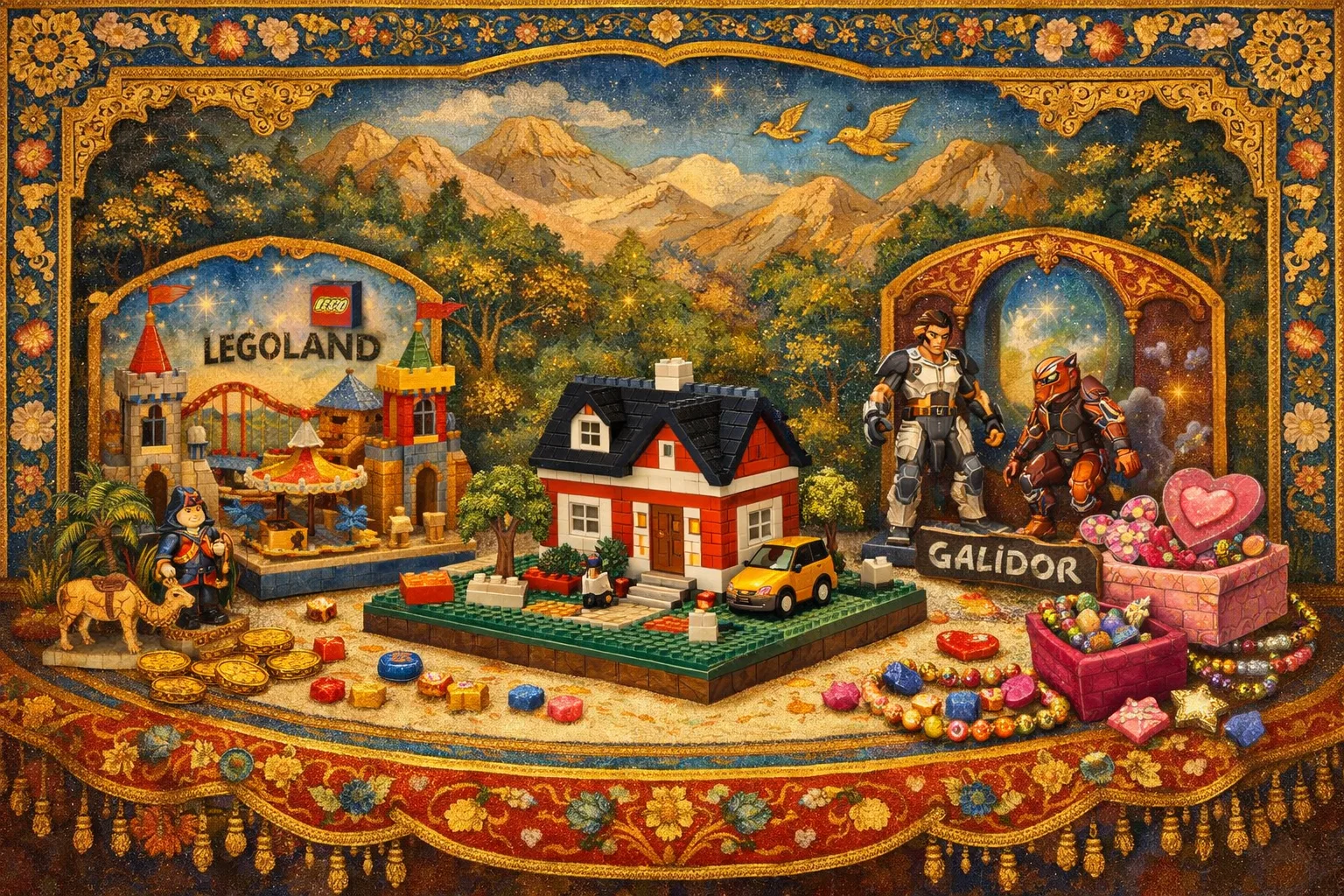
LEGO’s theme parks, Clikits and Galidor are useful failure cases because they show that “more growth” can make a company more fragile when it pulls attention, capital and complexity away from the system that makes the brand strong. These bets were not foolish because they were creative; they were fragile because they were weakly connected to LEGO’s core advantage: modular building, reusable parts, and play that lets children make rather than simply consume. Harvard Business Review’s account of LEGO’s turnaround groups theme parks, Clikits and Galidor among the pre-crisis innovation efforts that were unprofitable or failed outright.[Harvard Business Review]hbr.orgHarvard Business ReviewInnovating a Turnaround at LEGOSeptember 1, 2009 — Many of its innovation efforts—theme parks, Clikits craft sets…
In antifragility terms, the lesson is not that LEGO should never experiment beyond the brick. The lesson is that experiments become healthier when failure feeds back into a stronger core. The early-2000s crisis forced LEGO to distinguish brand extension from system extension: a product could carry the LEGO name and still weaken the LEGO system.
Why Some Adjacent Ventures Struggled
Theme parks, Clikits and Galidor failed or underperformed in different ways, but they shared a strategic pattern. Each tried to make LEGO bigger by entering a neighbouring market: leisure attractions, girls’ craft and jewellery, and television-led action figures. The problem was not adjacency itself. The problem was that the ventures demanded capabilities, cost structures and consumer logic that were not naturally reinforced by the brick business.
The theme parks were the most commercially credible of the three, because LEGOLAND was a strong expression of the LEGO brand. Yet operating parks is capital-intensive, seasonal and operationally distant from designing construction toys. LEGO’s 2004 annual report said the company had decided to sell the LEGOLAND Parks to improve liquidity and strengthen its financial base, and it treated the parks as discontinuing activities rather than part of the continuing LEGO Group.[LEGO]lego.comAnnual Report 2004 ENGAnnual Report 2004 LEGO GroupApril 26, 2005 — As part of the Action Plan it has been decided to sell off the LEGOLAND Parks to improv… In 2005, LEGO sold the four LEGOLAND parks to Merlin Entertainments for €375 million, while retaining an ownership link through the new structure.[LEGO]lego.comAnnual Report 2005 ENGAnnual Report 2005 ENG
Clikits exposed a different risk: chasing a consumer segment by imitating the category rather than translating the LEGO system into that segment. Launched as a major attempt to reach girls through designer craft accessories, Clikits moved LEGO towards jewellery, decoration and fashion-led play rather than construction-led play. Campaign described the 2003 launch as LEGO’s biggest attempt to crack the girls’ toys market with a designer craft range.[Campaign Live]campaignlive.co.uklego targets girls clikits rangelego targets girls clikits range The range had customisable elements, but its centre of gravity was accessory-making rather than the open-ended building system that made LEGO unusually replayable.
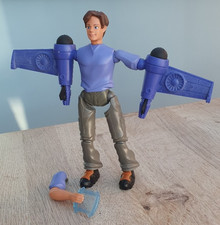
Galidor was the clearest break from the core. It was built around a television series and a line of articulated action figures, with interchangeable limbs rather than brick-built models. Animation World Network reported ahead of launch that the show would premiere in February 2002 on Fox Kids in the United States and YTV in Canada.[AWN]awn.comlego goes global galidorlego goes global galidor Brickset’s retrospective critique captures why fans often remember it as “not LEGO enough”: the toys involved constructing figures and swapping body parts, but offered little of the building depth associated with the brick.[Brickset.com]brickset.comlego fails galidorlego fails galidor LEGO’s own later Bits N’ Bricks transcript also notes that Galidor toys did not feature the familiar studs and tubes of the iconic LEGO brick.[LEGO]lego.comThe LEGO® game console from another realityThe LEGO® game console from another reality
These cases mattered because they were not isolated flops. They formed part of a broader pre-turnaround search for growth beyond traditional construction play. The company was trying to become a broader children’s lifestyle and entertainment business, but several of the resulting ventures weakened the link between innovation and LEGO’s distinctive economics.

How Non-Core Complexity Raised Risk
The fragile pattern was not simply “bad products lose money”. It was that non-core growth added complexity faster than LEGO could learn from it. A construction toy company can tolerate many experiments when the experiments share parts, design knowledge, manufacturing routines and consumer feedback. Theme parks, Clikits and Galidor shared the LEGO name, but much less of the operating system.
Galidor required television production, action-figure marketing and a new physical toy grammar. That meant LEGO was competing in a market where success depended heavily on media appeal, shelf impact and character attachment. Wired’s account of the turnaround describes Galidor as an attempt to build a full ecosystem around action figures, media tie-ins, McDonald’s promotions, video games and DVDs, but argues that the line lacked the construction flexibility that made LEGO play distinctive.[WIRED]wired.comBuilding success: how thinking 'inside the brick' saved LegoBuilding success: how thinking 'inside the brick' saved Lego This is a classic fragility problem: the venture needed many pieces of the ecosystem to work at once, yet failure in the television or character layer undermined the toys.
Clikits was less dramatic, but it created a subtler kind of fragility. By entering fashion-led craft, LEGO moved into a market shaped by faster taste cycles and category norms outside its core. Campaign’s contemporary coverage framed LEGO’s move into girls’ toys as part of a wider attempt to become a lifestyle brand, while noting the fast-changing nature of the market.[Campaign Live]campaignlive.co.uklego targets girls clikits rangelego targets girls clikits range That made the product line more exposed to trend risk and less protected by LEGO’s usual durability: a brick from one set remains useful in another, whereas a fashion accessory line can date quickly.
The parks added balance-sheet and management complexity. They were brand-rich but asset-heavy. LEGO’s 2004 numbers show the pressure around the reset: revenue had fallen from DKK 10.1 billion in 2002 to DKK 6.7 billion in 2004, while the company recorded a net loss of DKK 1.9 billion in 2004.[LEGO]lego.comCompany ProfileCompany Profile Selling the parks was therefore not an admission that LEGOLAND had no value. It was a recognition that LEGO could not afford to have a capital-intensive leisure business competing with the urgent repair of the toy company.
The wider complexity problem is supported by later research into LEGO’s product system. A PLOS One study of LEGO sets from 1955 to 2015 found that sets became bigger, more colourful and more specialised, with a significantly larger vocabulary of bricks and fewer shared parts between sets.[PLOS]journals.plos.orgSource details in endnotes. That study covers a longer period than the early-2000s crisis, so it should not be read as a direct diagnosis of Clikits or Galidor alone. But it helps explain why LEGO’s recovery depended on governing complexity, not simply producing more novelty.
What Each Failure Revealed
The three cases taught different lessons about fragility.
VentureWhat LEGO was reaching forWhy it became fragileWhat the lesson becameLEGOLAND parksBranded family leisure and immersive experiencesHigh capital demands and operational distance from toysBrand experiences can matter, but ownership and operating structure must not endanger the coreClikitsGrowth with girls through craft, jewellery and decorationA category logic closer to fashion accessories than construction playNew audiences should be reached through LEGO-native play, not just demographic targetingGalidorTelevision-led action figures and character entertainmentWeak connection to studs-and-tubes building, plus dependence on media successStory worlds work better when they reinforce building rather than replace it
The important nuance is that LEGO did not learn a crude lesson against parks, girls’ products or storytelling. Later LEGO successes show the opposite. The company kept using stories, characters, licensing and experience-led retail, but it became more disciplined about whether these activities strengthened the brick system.
Galidor’s contrast with Bionicle is especially revealing. Both used story and character. But Bionicle still had a stronger buildable logic and a richer internal mythology that supported construction play, while Galidor looked and behaved more like a conventional action-figure line. Brickset’s comparison of Galidor with other buildable figure themes makes the point plainly: Galidor offered too little actual building to satisfy the expectations attached to LEGO.[Brickset.com]brickset.comgalidor was it all badgalidor was it all bad
Clikits similarly foreshadowed a question LEGO would keep revisiting: how to include more girls without reducing “girls’ play” to a separate, less LEGO-like aisle. The later success of LEGO Friends and other lines is outside this page’s main scope, but the strategic contrast is relevant. Clikits treated the segment as an adjacent craft market; later approaches worked harder to keep construction, narrative setting and modular play in the centre.

What LEGO Kept From the Failures
The strongest antifragile result was that LEGO did not become timid. It became more selective. The company retained the useful parts of the failed experiments: the value of live brand experiences, the importance of reaching underserved audiences, and the power of story. What changed was the test for whether a venture deserved investment.
For theme parks, LEGO shifted from direct ownership under financial stress to a structure that preserved brand upside while reducing immediate balance-sheet pressure. The 2005 sale moved park operations to Merlin Entertainments, a specialist attractions operator, while LEGO’s owners retained a stake in the wider entertainment group.[LEGO]lego.comAnnual Report 2007 ENGAnnual Report 2007 ENG That choice kept LEGOLAND alive as a brand experience without forcing the recovering toy company to run everything itself.
The same logic still matters in newer experience moves. Reuters reported in 2025 that LEGO agreed to buy 29 indoor entertainment centres from Merlin for about £200 million, while Merlin would continue operating 11 LEGOLAND theme parks under licence.[Reuters]reuters.comLego buys entertainment centres from Madame Tussauds owner Merlin for $270 mlnLego buys entertainment centres from Madame Tussauds owner Merlin for $270 mln That does not reverse the early-2000s lesson. It shows a more mature version of it: LEGO can own or shape experiences when they fit its retail and brand strategy, but large theme-park operations remain a specialised business.
For Clikits, the retained lesson was that audience expansion should not require abandoning the LEGO grammar. The failure was not “girls do not like LEGO”; it was that a LEGO product aimed at girls still needed the depth, recombination and long-tail play value that make the system strong. The line’s weakness helped expose the danger of demographic shortcuts: a company can target a group so narrowly that it forgets the underlying play value that should make the product worth buying.
For Galidor, the retained lesson was that media can amplify LEGO, but should not substitute for LEGO. Television, films, games and licensing later became enormous parts of the brand ecosystem, but the healthier version sends attention back into building. A character, film or game can create desire; the set still has to reward construction, display, modification and reuse. Galidor leaned too far towards pre-made entertainment and not far enough towards buildable possibility.
The Antifragile Lesson for LEGO
These failed bets made LEGO more antifragile because they supplied painful information the company could not ignore. They showed that brand extension is not the same as strategic strength. A theme park can be beloved and still be too capital-intensive for a company in crisis. A craft line can reach a desired audience and still fail to use the brand’s deepest capabilities. A television-backed action figure can look like modern entertainment strategy and still be fragile if the toy at the centre does not feel meaningfully LEGO.
The 2005 annual report suggests the reset was already working: LEGO reported revenue growth, improved profitability and stronger cash flow, with improvement attributed to innovated classic LEGO products, cost savings, asset sales and increased cash flows.[LEGO]lego.comProgress report2006Progress report2006 That recovery was not achieved by refusing innovation. It was achieved by forcing innovation to pass through a stronger filter.
In that sense, theme parks, Clikits and Galidor became negative assets that produced positive learning. They taught LEGO to ask harder questions before expanding: Does this venture strengthen the system of play? Does it share parts, skills, audiences or feedback with the core? Can it fail without threatening the company? Does it make LEGO more modular, more reusable and more valuable to its fans, or merely more stretched?
The answer after the crisis was not “stay small”. It was “grow in ways that make the brick system stronger”. That is why these failed bets remain central to LEGO’s antifragility story: they were examples of fragile expansion, but the company used them to build more disciplined, more resilient and eventually more adaptive growth.

Amazon book picks
Further Reading
Books and field guides related to What LEGO's Failed Bets Taught the Company. Use these as the next step if you want deeper reading beyond the article.
The Innovator's Dilemma: The Revolutionary Book That Will Cha...
Explores strategic mistakes during growth efforts.

Antifragile: Things That Gain from Disorder
Directly supports the article's central conceptual framework.
Good Strategy, Bad Strategy
Relevant to distinguishing good expansion from bad expansion.

Brick by Brick: How LEGO Rewrote the Rules of Innovation and...
Analyzes failed expansion efforts and lessons learned.
eBay marketplace picks
Marketplace Samples
Topic-anchored marketplace searches for visual, collectible, or second-hand items related to this page.



Endnotes
1.
Source: lego.com
Title: Annual Report 2004 ENG
Link:https://www.lego.com/cdn/cs/aboutus/assets/blt07abb4b8a3da3f39/Annual_Report_2004_ENG.pdf
Source snippet
Annual Report 2004 LEGO GroupApril 26, 2005 — As part of the [Action Plan]({{ 'action-plan/' | relative_url }}) it has been decided to sell off the LEGOLAND Parks to improv...
Published: April 26, 2005
2.
Source: lego.com
Title: Annual Report 2005 ENG
Link:https://www.lego.com/cdn/cs/aboutus/assets/blt6eacf5a8b7af1359/Annual_Report_2005_ENG.pdf
3.
Source: awn.com
Title: lego goes global galidor
Link:https://www.awn.com/news/lego-goes-global-galidor
4.
Source: brickset.com
Title: lego fails galidor
Link:https://brickset.com/article/25231/lego-fails-galidor
5.
Source: lego.com
Title: The LEGO® game console from another reality
Link:https://www.lego.com/cdn/cs/set/assets/bltd6c9fecf8bee9f9b/bits_n_bricks_s03e37_feature_and_transcript.pdf
6.
Source: wired.com
Title: Building success: how thinking ‘inside the brick’ saved Lego
Link:https://www.wired.com/story/building-success
7.
Source: journals.plos.org
Link:https://journals.plos.org/plosone/article?id=10.1371%2Fjournal.pone.0190651
8.
Source: reuters.com
Title: Lego buys entertainment centres from Madame Tussauds owner Merlin for $270 mln
Link:https://www.reuters.com/business/lego-buy-entertainment-centres-merlin-270-mln-2025-09-24/
9.
Source: lego.com
Title: Company Profile
Link:https://www.lego.com/cdn/cs/aboutus/assets/blt4ee78e0776fce92f/LEGO_Company_Profile.pdf
10.
Source: lego.com
Title: Annual Report 2007 ENG
Link:https://www.lego.com/cdn/cs/aboutus/assets/bltd2f21c606528791c/Annual_Report_2007_ENG.pdf
11.
Source: lego.com
Title: Progress report2006
Link:https://www.lego.com/cdn/cs/aboutus/assets/blt84e427a3dcec8045/Progress_report2006.pdf
12.
Source: lego.com
Title: Annual Report 2006 ENG
Link:https://www.lego.com/cdn/cs/aboutus/assets/blt6469a262aeabdb3d/Annual_Report_2006_ENG.pdf
13.
Source: d3.harvard.edu
Title: lego the missing bricks in their global supply chain
Link:https://d3.harvard.edu/platform-rctom/submission/lego-the-missing-bricks-in-their-global-supply-chain/
14.
Source: brickset.com
Title: galidor was it all bad
Link:https://brickset.com/article/14936/galidor-was-it-all-bad
15.
Source: brickset.com
Link:https://brickset.com/sets/theme-Galidor
16.
Source: hbr.org
Link:https://hbr.org/2009/09/innovating-a-turnaround-at-lego
Source snippet
Harvard Business ReviewInnovating a Turnaround at LEGOSeptember 1, 2009 — Many of its innovation efforts—theme parks, Clikits craft sets...
Published: September 1, 2009
17.
Source: campaignlive.co.uk
Title: lego targets girls clikits range
Link:https://www.campaignlive.co.uk/article/lego-targets-girls-clikits-range/169786
18.
Source: campaignlive.co.uk
Title: analysis lego moves girls market
Link:https://www.campaignlive.co.uk/article/analysis-lego-moves-girls-market/170455
19.
Source: bricklink.com
Link:https://www.bricklink.com/catalogList.asp?catID=444&catType=P&catXrefLevel=0&colorPart=63&itemYear=2002
20.
Source: bricklink.com
Link:https://www.bricklink.com/catalogList.asp?catID=444&catType=P&catXrefLevel=0&itemDateYear=2002&itemYear=2002
21.
Source: bricklink.com
Link:https://www.bricklink.com/catalogList.asp?catType=P&itemYear=2002&wID=45108
22.
Source: Wikipedia
Title: Merlin Entertainments
Link:https://en.wikipedia.org/wiki/Merlin_Entertainments
23.
Source: galidor.fandom.com
Link:https://galidor.fandom.com/wiki/LEGO
24.
Source: brickipedia.fandom.com
Link:https://brickipedia.fandom.com/wiki/Galidor
25.
Source: brickipedia.fandom.com
Link:https://brickipedia.fandom.com/wiki/Clikits
26.
Source: facebook.com
Link:https://www.facebook.com/groups/758824395633075/posts/1524908099024697/
27.
Source: en.brickimedia.org
Link:https://en.brickimedia.org/wiki/Galidor
28.
Source: news.lugnet.com
Link:https://news.lugnet.com/clikits/?n=%2A20%2C-20&v=a
29.
Source: bigintblog.files.wordpress.com
Link:https://bigintblog.files.wordpress.com/2014/08/lego.pdf
Additional References
30.
Source: youtube.com
Link:https://www.youtube.com/watch?v=n2mlewMn53E
Source snippet
How LEGO Almost DISAPPEARED Forever in 2003?...
31.
Source: youtube.com
Title: LEGO’s Comeback: From Nearly Bankrupt To $6 Billion
Link:https://www.youtube.com/watch?v=IjcSKukg9IE
Source snippet
The rise and fall of LEGO: From near bankruptcy to the world's largest toy company...
32.
Source: youtube.com
Title: How LEGO Almost WENT BANKRUPT 3 Times
Link:https://www.youtube.com/watch?v=krYxfpkPIjg
Source snippet
LEGO near bankruptcy crisis 2003 turnaround history How LEGO Almost DISAPPEARED Forever in 2003?...
33.
Source: youtube.com
Link:https://www.youtube.com/watch?v=7CGy2fhz-Rk
Source snippet
How LEGO Saved Itself From Bankruptcy: The Greatest Turnaround Story...
34.
Source: linkedin.com
Link:https://www.linkedin.com/posts/melinapalmer_a-long-time-ago-in-a-galaxy-not-so-far-activity-7378451044487319552-AA7_
35.
Source: facebook.com
Link:https://www.facebook.com/groups/323901678056131/posts/1580365089076444/
36.
Source: medium.com
Link:https://medium.com/%40anshi.gupta2002/how-lego-clicked-back-into-place-1185e3c2a09c
37.
Source: linkedin.com
Link:https://www.linkedin.com/posts/erikkruger_how-legos-darkest-moment-became-its-greatest-activity-7455613228518342656-VQ55
38.
Source: researchgate.net
Link:https://www.researchgate.net/publication/363359654_Incorporating_History_into_Innovation_A_Case_Study_of_LEGO
39.
Source: reddit.com
Link:https://www.reddit.com/r/lego/comments/c6gyyi/kirkby_the_lego_families_investment_firm/
Topic Tree
Follow this branch
Parent topic
LEGO AntifragilityRelated pages 14
- Adult Sets Why Adults Became Central to LEGO Growth
- Brick System Why the Brick Became LEGO's Best Constraint
- Complexity When More LEGO Products Made LEGO Weaker
- Crisis Test What LEGO's Crisis Revealed About Fragility
- Digital Play Can LEGO Adapt Without Losing the Brick?
- Fan Signals How LEGO Fans Became a Market Sensor
- Framework Is LEGO Really Antifragile or Just Resilient?
- Governed Bets How LEGO Learned To Make Safer Bets
- +6 more in sidebar