Within LEGO Antifragility
Why LEGO Ideas Is Not Just Crowdsourcing
LEGO Ideas turns fan proposals into options, but LEGO still filters them for safety, fit, licensing and commercial promise.
On this page
- How fan submissions become product candidates
- Why 10,000 supporters are only a filter
- The limits of crowd led product development

Page outline Jump by section
Introduction
LEGO Ideas is often described as crowdsourcing, but that undersells what makes it important to LEGO’s antifragility. It is not a system where the crowd simply chooses the next set. It is a governed option-making machine: fans propose models, other fans create a visible signal of demand, and LEGO then applies its own filters for brand fit, safety, buildability, licensing, production feasibility and commercial promise. That makes LEGO Ideas valuable precisely because it is open and constrained at the same time.
The platform grew out of LEGO CUUSOO, first launched with CUUSOO System in Japan in 2008, expanded globally in 2011, and relaunched as LEGO Ideas in 2014 after the earlier pilot became too large for its original platform. LEGO’s own history describes this as part of a broader move towards community-based innovation after the company became more interested in adult fan creativity.[LEGO]lego.com® Ideas | LEGO® History | LEGO.com USLEGO® Ideas | LEGO® History | LEGO.com US…
Why LEGO Ideas Is Not Just Crowdsourcing
LEGO Ideas turns fan creativity into a portfolio of small, reversible product options. A fan can put forward a model; the community can support it; LEGO can observe which concepts attract enthusiasm before committing full development resources. This is useful in antifragility terms because the company is not betting everything on a single internal forecast. It is allowing unexpected demand to surface from outside the firm while still keeping final control inside the firm.
The official LEGO history page makes the sequence clear. CUUSOO began as an experiment in Japan in 2008, where adult fan designers could submit ideas, and a proposal receiving enough support could be reviewed by LEGO. When the programme went global in 2011, the support threshold rose to 10,000. LEGO Ideas then launched in 2014 as a more robust platform, with a limited timeframe for projects to reach the required support level.[LEGO]lego.comHelp TopicsHelp Topics…
That matters because an unguided crowd can generate enthusiasm, but not necessarily a manufacturable toy. LEGO Ideas works as open innovation only because the crowd is one part of a larger governance process. The platform captures weak signals: a surprising licence, an overlooked niche, a display model for adults, a science theme, a nostalgic sitcom, a space vehicle, a botanical idea, or a fan-built object that LEGO’s internal teams might not have prioritised. The company then asks a harder question: does this fan enthusiasm become a safe, buildable, legally available, commercially sensible LEGO product?
This is the antifragile feature. Instead of treating external fan creativity as disorder to be managed away, LEGO converts it into structured variation. Many ideas will fail, but the cost of letting them surface is relatively low compared with developing every speculative product internally.

How Fan Submissions Become Product Candidates
The LEGO Ideas journey has three broad stages: submission, public support and LEGO review. A creator publishes a product idea with a model and presentation. Other users support it. If it reaches 10,000 supporters, it enters official review rather than automatically becoming a set. LEGO’s help page says that after the 10,000-supporter milestone, the creator is asked for more information such as photos of the model deconstructed or a Studio file so LEGO can rebuild it, alongside necessary legal documents. The review then takes several months.[LEGO]ideas.lego.comOpen source on lego.com.
This extra information step is more important than it may look. A fan model can be visually persuasive while still being difficult to turn into a retail product. LEGO must check whether it can be rebuilt reliably, whether the building experience is enjoyable, whether the model can survive handling, whether parts are available, whether the price point is plausible, and whether the subject fits the LEGO brand.
The 10,000-supporter threshold therefore creates a candidate, not a command. LEGO Ideas is open at the front end and selective at the back end. That combination lets LEGO learn from fan demand without surrendering product responsibility. A community vote may show that people like the concept; it does not prove that the set can be produced, licensed, packed, priced, marketed and supported at scale.
Research on LEGO Ideas also supports this distinction between early crowd filtering and final selection. A 2023 Research Policy study using LEGO Ideas data found that creator and idea characteristics can help predict early crowd selection, but they are much less useful for predicting final winners at later stages. In other words, the crowd is good at helping ideas gain visibility, but late-stage success depends on factors beyond simple popularity.[ScienceDirect]sciencedirect.comWeeding out or picking winners in open innovation? Factors driving multi-stage crowd selection on LEGO ideas - ScienceDirect…
Why 10,000 Supporters Are Only a Filter
The 10,000-supporter rule is easy to misunderstand. It feels like a democratic vote, but in practice it is a screening mechanism. It tells LEGO that a concept has enough community energy to deserve serious evaluation. It does not tell LEGO that the proposal is safe, licensable, profitable or strategically desirable.
This distinction becomes clearer when review rounds become crowded. Specialist LEGO press reported that recent LEGO Ideas review rounds have contained very large numbers of qualifying projects, including a record 146 submissions in the second 2025 review. That scale reinforces the practical limit: LEGO Ideas can surface many more plausible ideas than LEGO can turn into official sets.[Facebook]facebook.comthe first 2025 lego ideas review results are here so get comfortable on the edgeSo get…146 submissions reached the 10,000 supporter milestone, and qualified for the Second 2025 Review. With 146 projects in this rev…
The crowd’s role is still valuable. A 10,000-supporter project brings evidence that a concept can mobilise an audience. It may also reveal a community that LEGO did not know was commercially reachable. But the larger the pool of 10,000-supporter projects becomes, the more obvious it is that LEGO must continue to act as editor, not just manufacturer.
That editorial role gives LEGO Ideas its guardrails:
- Demand signal, not final authority: Supporters show interest, but LEGO decides whether a set should be made.
- Community creativity, not unlimited scope: Fans can propose widely, but must work within LEGO’s rules.
- External discovery, internal accountability: LEGO benefits from fan imagination, but LEGO remains responsible for safety, quality, licences and brand meaning.
- Option creation, not obligation: Each proposal creates a possible product path. LEGO can exercise the option, defer it or reject it.
This is why LEGO Ideas fits the antifragility theme better than a simple “listen to customers” story. The platform does not merely collect preferences. It creates many small experiments, lets public enthusiasm sort some of them, and then applies corporate judgement before resources are committed.
The Guardrails That Make Openness Usable
LEGO Ideas is open only within a defined policy frame. The official guidelines say that projects reaching 10,000 supporters qualify for review, with three reviews each year, and that the Review Board considers many factors before approving a product idea.[LEGO Ideas]ideas.lego.comLEGOLEGO® Ideas | LEGO® History | LEGO.com US The platform also uses content rules and terms to remove or reject material LEGO considers illegal, dangerous, misleading or otherwise inappropriate.[LEGO Ideas]ideas.lego.comLEGOLEGO® Ideas | LEGO® History | LEGO.com US
The clearest guardrail is licensing. LEGO’s help page on licensed brands says the company sometimes turns down Ideas submissions referring to specific brands or licensed properties because it knows it cannot secure the rights. It also says LEGO cannot accept product ideas based on Star Wars, DC, Marvel, Volkswagen and other brands for which it already produces sets, and no longer accepts ideas based on licences or concepts already commercialised as official LEGO Ideas sets, even if the licence has since retired.[LEGO]ideas.lego.comOpen source on lego.com.
This is not merely legal housekeeping. Licensing rules prevent LEGO Ideas from becoming a public queue of products LEGO already knows it cannot or should not make. They also reduce confusion among fans, protect existing commercial relationships and stop the platform being overwhelmed by popular but strategically blocked intellectual property.
There are also design and production guardrails. Coverage of LEGO’s 2024 guideline update notes that the maximum element count for Ideas submissions rose from 3,000 to 5,000, that a minimum 200-element count was introduced, and that LEGO added a minifigure-to-element ratio guide.[Brick Fanatics]brickfanatics.comBrick Fanatics LEGO Ideas confirms new guidelines, including biggerBrick Fanatics LEGO Ideas confirms new guidelines, including bigger These kinds of rules matter because fan models can be spectacular but commercially awkward. A huge model may win online admiration while being too expensive, fragile or niche for a normal retail set.
The result is a deliberately bounded form of openness. LEGO invites fans to surprise it, but not to ignore the realities of the LEGO system.

What LEGO Gains From the Guardrailed Model
The strategic gain is not just occasional hit products. LEGO Ideas gives the company a way to observe demand, engage adult fans, test themes and learn which stories people want to build. LEGO reported in 2018 that the platform had grown to more than one million members, more than 26,000 submitted product ideas, 166 ideas with 10,000 supporters and 23 official LEGO Ideas sets over its first decade.[LEGO]lego.comHelp TopicsHelp Topics
Those numbers show the asymmetry that makes the system powerful. Thousands of ideas can be proposed. A smaller number reach the serious-review stage. A much smaller number become products. LEGO is not trying to manufacture the crowd’s entire imagination; it is using that imagination to expand the range of options available to the company.
This helps LEGO in three ways.
First, it reduces innovation blindness. Internal product teams can be excellent and still miss what fans are building, collecting, remixing or discussing. LEGO Ideas gives obscure or unexpected concepts a route into the company’s attention.
Second, it creates pre-market evidence. A supported project brings a visible community before the company makes a full production commitment. That does not guarantee success, but it is better than guessing in isolation.
Third, it strengthens fan identity. LEGO Ideas tells skilled builders that their creativity is not merely tolerated but potentially product-relevant. LEGO’s own 10th-anniversary release framed the platform as co-creation with adult fans and quoted company leaders describing the fan community as a source of powerful ideas and stories.[LEGO]lego.comIdeas 10th anniversaryIdeas 10th anniversary
In antifragility terms, LEGO Ideas converts external variety into internal learning. The company does not need every proposal to succeed. The platform becomes stronger when it repeatedly exposes LEGO to new tastes, new niches and new fan behaviours.
The Limits of Crowd-Led Product Development
The limits of LEGO Ideas are the reason it works. A fully crowd-led product system would be fragile in a different way: vulnerable to hype cycles, organised voting campaigns, licence conflicts, unbuildable designs, adult themes, oversized models and concepts that excite a vocal niche but do not fit LEGO’s broader audience.
The platform therefore sits between two extremes. On one side is closed internal innovation, where LEGO risks missing fan creativity. On the other side is unrestricted crowdsourcing, where LEGO risks losing coherence and control. LEGO Ideas is the middle path: fans generate variation; LEGO governs selection.
This also explains why rejection is not necessarily failure. A rejected 10,000-supporter project may still have taught LEGO something about demand, presentation, fan mobilisation or subject matter. The creator may gain visibility. Other builders may learn what kinds of concepts attract support. LEGO may see a pattern across several rejected projects that later informs a different product.
The hard truth is that most successful Ideas campaigns do not become official sets. That can frustrate fans who read 10,000 supporters as a promise. But the platform’s value to LEGO depends on the threshold being a filter, not a binding vote. If every popular proposal had to be made, LEGO Ideas would stop being a disciplined option engine and become a costly production obligation.
Why the Model Is Antifragile
LEGO Ideas is antifragile because it lets LEGO benefit from uncertainty without being consumed by it. Fan creativity is unpredictable. Online enthusiasm is uneven. Licences shift. Adult builders discover new display tastes. Nostalgia cycles return unexpectedly. A fragile company might either ignore that volatility or chase it blindly. LEGO’s guarded approach does neither.
Instead, LEGO Ideas creates a repeatable pattern:

- Let many external ideas appear.
- Let the community reveal which ones attract support.
- Move only the strongest signals into formal review.
- Apply safety, brand, legal and commercial filters.
- Turn a few options into products while learning from the wider flow.
This is not pure openness. It is governed openness. That is the point. LEGO’s post-crisis lesson was not that every innovation should be pursued, but that innovation needed better constraints. LEGO Ideas embodies that lesson at platform level: more external creativity at the front, stronger judgement at the gate.
The result is a product-development mechanism that is more adaptive than traditional closed planning and more disciplined than simple crowd rule. LEGO Ideas does not make LEGO immune to failure, licensing risk or market change. It gives the company a structured way to turn fan-driven uncertainty into information, options and occasional products that LEGO might not have created alone.
Amazon book picks
Further Reading
Books and field guides related to Why LEGO Ideas Is Not Just Crowdsourcing. Use these as the next step if you want deeper reading beyond the article.

Antifragile: Things That Gain from Disorder
Supports the diversification argument behind decor-driven growth.
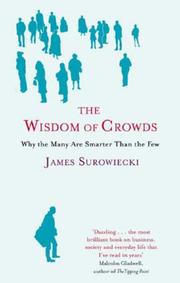
The Wisdom of Crowds:Why the Many Are Smarter Than the Few an...
Provides context for crowd-generated ideas and signals.

Brick by Brick: How LEGO Rewrote the Rules of Innovation and...
Explains LEGO's move toward community-driven innovation.
eBay marketplace picks
Marketplace Samples
Example marketplace items related to this page. Use the search link to explore similar finds on eBay.



Endnotes
1.
Source: lego.com
Title: ® Ideas | LEGO® History | LEGO.com US
Link:https://www.lego.com/en-us/history/articles/j-lego-ideas
Source snippet
LEGO® Ideas | LEGO® History | LEGO.com US...
2.
Source: lego.com
Title: Help Topics
Link:https://www.lego.com/en-us/service/help-topics/article/what-happens-to-my-product-idea-after-i-reach-10-000-supporters
Source snippet
Help Topics...
3.
Source: sciencedirect.com
Link:https://www.sciencedirect.com/science/article/pii/S0048733323001592
Source snippet
Weeding out or picking winners in open innovation? Factors driving multi-stage crowd selection on LEGO ideas - ScienceDirect...
4.
Source: facebook.com
Title: the first 2025 lego ideas review results are here so get comfortable on the edge
Link:https://www.facebook.com/LEGOIdeas/posts/the-first-2025-lego-ideas-review-results-are-here-so-get-comfortable-on-the-edge/1263693849132661/
Source snippet
So get...146 submissions reached the 10,000 supporter milestone, and qualified for the Second 2025 Review. With 146 projects in this rev...
5.
Source: ideas.lego.com
Link:https://ideas.lego.com/guidelines
6.
Source: ideas.lego.com
Link:https://ideas.lego.com/terms
7.
Source: lego.com
Title: Help Topics
Link:https://www.lego.com/en-ae/service/help-topics/article/creating-product-ideas-with-licensed-brands
8.
Source: lego.com
Title: Ideas 10th anniversary
Link:https://www.lego.com/en-us/aboutus/news/2019/october/ideas-10th-anniversary
9.
Source: ideas.lego.com
Link:https://ideas.lego.com/
10.
Source: lego.com
Link:https://www.lego.com/en-fr/service/help-topics/article/submitting-your-idea-to-lego-ideas
11.
Source: facebook.com
Link:https://www.facebook.com/groups/998154171559369/posts/1566803628027751/
12.
Source: facebook.com
Title: why do older ideas sets have cuusoo brandingfor those unaware lego ideas started
Link:https://www.facebook.com/blocksmag/posts/why-do-older-ideas-sets-have-cuusoo-brandingfor-those-unaware-lego-ideas-started/1028586522440111/
13.
Source: facebook.com
Link:https://www.facebook.com/LEGOIdeas/posts/its-that-time-again-our-lego-ideas-review-board-has-now-evaluated-all-the-qualif/1149616003873780/
14.
Source: facebook.com
Title: the latest review qualification round has just closed and wow was it a big one 1
Link:https://www.facebook.com/LEGOIdeas/posts/the-latest-review-qualification-round-has-just-closed-and-wow-was-it-a-big-one-1/1212636977571682/
15.
Source: facebook.com
Title: via lego this project moves from the idea stage to the review stage a lego revie
Link:https://www.facebook.com/torontoravecommunity/posts/via-lego-this-project-moves-from-the-idea-stage-to-the-review-stage-a-lego-revie/1144255687885467/
16.
Source: facebook.com
Link:https://www.facebook.com/torontoravecommunity/videos/via-lego-this-project-moves-from-the-idea-stage-to-the-review-stage-a-lego-revie/604665486004230/
17.
Source: facebook.com
Link:https://www.facebook.com/groups/legobuild/posts/1984336028376322/
18.
Source: facebook.com
Link:https://www.facebook.com/100095542774602/posts/sadly-lego-wont-approve-any-of-my-ideas-because-theyve-been-created-with-ai-and-/729398120254941/
19.
Source: facebook.com
Link:https://www.facebook.com/LEGOIdeas/photos/we-have-updated-the-lego-ideas-guidelinesas-we-learn-and-continue-to-develop-the/1587768404570685/
20.
Source: facebook.com
Link:https://www.facebook.com/groups/991442004640863/posts/1938105083307879/
21.
Source: brickfanatics.com
Title: Brick Fanatics LEGO Ideas confirms new guidelines, including bigger
Link:https://www.brickfanatics.com/lego-ideas-guidelines-piece-minifigure-ratio
22.
Source: brickfanatics.com
Title: lego ideas platform provides clarity on permissible ips
Link:https://www.brickfanatics.com/lego-ideas-platform-provides-clarity-on-permissible-ips
23.
Source: brickfanatics.com
Title: every lego ideas approved rejected 2025
Link:https://www.brickfanatics.com/every-lego-ideas-approved-rejected-2025
24.
Source: brickfanatics.com
Title: lego ideas fan platform new milestone
Link:https://www.brickfanatics.com/lego-ideas-fan-platform-new-milestone
25.
Source: brickfanatics.com
Title: lego ideas review results is bad news for three submissions
Link:https://www.brickfanatics.com/lego-ideas-review-results-is-bad-news-for-three-submissions
26.
Source: brickfanatics.com
Title: lego has safety concerns around ideas set
Link:https://www.brickfanatics.com/lego-has-safety-concerns-around-ideas-set
27.
Source: reddit.com
Link:https://www.reddit.com/r/lego/comments/63mg5n/lego_ideas_guidelines_updated_not_accepting/
28.
Source: reddit.com
Link:https://www.reddit.com/r/lego/comments/1fsusem/lego_ideas_rules_updated_includes_part_limit/
29.
Source: brickipedia.fandom.com
Title: LEGO Ideas
Link:https://brickipedia.fandom.com/wiki/LEGO_Ideas
30.
Source: brickipedia.fandom.com
Title: Rejected Projects
Link:https://brickipedia.fandom.com/wiki/LEGO_Ideas/Rejected_Projects
31.
Source: thebrickblogger.com
Title: lego ideas rules guidelines updates
Link:https://thebrickblogger.com/2024/10/lego-ideas-rules-guidelines-updates/
32.
Source: d3.harvard.edu
Title: lego ideas a leading crowdsourcing platform in the toy industry
Link:https://d3.harvard.edu/platform-digit/submission/lego-ideas-a-leading-crowdsourcing-platform-in-the-toy-industry/
33.
Source: Wikipedia
Title: Lego Ideas
Link:https://en.wikipedia.org/wiki/Lego_Ideas
34.
Source: idisplayit.co.uk
Title: LEG O IDEAS Program
Link:https://www.idisplayit.co.uk/news/lego-releases/lego-ideas-program-what-it-is-and-how-to-submit-an-idea/?srsltid=AfmBOoo5ssfw5B5QxK5cvvOixoyhi0ssIAly30th2UhvQ0eR2gBIk8_G
35.
Source: idisplayit.co.uk
Title: LEG O IDEAS Program
Link:https://www.idisplayit.co.uk/news/lego-releases/lego-ideas-program-what-it-is-and-how-to-submit-an-idea/?srsltid=AfmBOooQ5xwTquUaDUGUtEbVG_owVHRKQjApTHf2tIttwYtcu3XuUjc8
36.
Source: idisplayit.co.uk
Title: LEG O IDEAS Program
Link:https://www.idisplayit.co.uk/news/lego-releases/lego-ideas-program-what-it-is-and-how-to-submit-an-idea/?srsltid=AfmBOopHx8YZUqaacBNhOnVPk_FQ12vCc8DSBhYZEl0Ik1_ncPIVxlZD
37.
Source: brickset.com
Title: lego ideas no longer accepting projects based on active licenses
Link:https://brickset.com/article/27446/lego-ideas-no-longer-accepting-projects-based-on-active-licenses
38.
Source: crowdsourcingweek.com
Link:https://crowdsourcingweek.com/blog/lego-success-through-crowdsourcing/
39.
Source: toysnbricks.com
Link:https://www.toysnbricks.com/lego-ideas-how-it-works-fan-voting-and-how-to-submit-your-design-full-guide-to-lego-ideas-platform-program/
40.
Source: stonewars.com
Title: lego ideas rules and guidelines explained
Link:https://stonewars.com/features/lego-ideas-rules-and-guidelines-explained/
41.
Source: stonewars.com
Title: lego ideas first review 2026
Link:https://stonewars.com/news/lego-ideas-first-review-2026/
42.
Source: thebrickfan.com
Title: lego ideas no longer accepting projects based on third party and active licenses
Link:https://www.thebrickfan.com/lego-ideas-no-longer-accepting-projects-based-on-third-party-and-active-licenses/
Additional References
43.
Source: researchgate.net
Link:https://www.researchgate.net/publication/286349887_Crowdsourcing_as_lego_Unpacking_the_building_blocks_of_crowdsourcing_collaboration_processes
44.
Source: researchgate.net
Link:https://www.researchgate.net/publication/375272506_The_Factors_Influencing_the_Idea_Recognition_of_Open_Innovation_Platforms_Take_LEGO_Ideas_as_an_Example
45.
Source: researchgate.net
Link:https://www.researchgate.net/publication/376118689_Weeding_out_or_picking_winners_in_open_innovation_Factors_driving_multi-stage_crowd_selection_on_LEGO_ideas
46.
Source: hacerlobien.net
Link:https://www.hacerlobien.net/lego/Grupol-014-Innovation-Management-2.pdf
47.
Source: semanticscholar.org
Link:https://www.semanticscholar.org/paper/Brand-Community-Innovation%3A-An-Intrinsic-Case-Study-Antorini/4a4e0090f809ce2f80b36997c096ea0ad63e0466
48.
Source: profwurzer.com
Link:https://profwurzer.com/harnessing-crowds-without-losing-control-legos-ip-playbook/
49.
Source: instagram.com
Link:https://www.instagram.com/reel/DY0kAGMiprJ/
50.
Source: qmarkets.net
Link:https://www.qmarkets.net/resources/article/open-innovation-tool/
51.
Source: reddit.com
Link:https://www.reddit.com/r/lego/comments/1i1oh9i/some_of_the_ideas_sets_that_gained_10k_votes_but/
52.
Source: instagram.com
Link:https://www.instagram.com/reel/DQc88FhjChU/
Topic Tree
Follow this branch
Parent topic
LEGO AntifragilityRelated pages 14
- Adult Sets Why Adults Became Central to LEGO Growth
- Brick System Why the Brick Became LEGO's Best Constraint
- Complexity When More LEGO Products Made LEGO Weaker
- Crisis Test What LEGO's Crisis Revealed About Fragility
- Digital Play Can LEGO Adapt Without Losing the Brick?
- Failed Bets What LEGO's Failed Bets Taught the Company
- Fan Signals How LEGO Fans Became a Market Sensor
- Framework Is LEGO Really Antifragile or Just Resilient?
- +6 more in sidebar