Within LEGO Antifragility
What LEGO's Crisis Revealed About Fragility
LEGO's near-collapse exposed the fragile choices that later made its recovery more disciplined and focused.
On this page
- How complexity built up before the shock
- What the financial reset changed
- Why recovery became a learning engine
Page outline Jump by section
Introduction
LEGO’s early-2000s crisis was not just a bad trading period. It was a test that exposed how a celebrated company had become fragile: too complex, too stretched beyond its core play system, too slow for changing toy markets, and too unclear about which experiments actually created value. In 2003, net sales fell 26 per cent, play-material sales fell 29 per cent, and the company recorded a pre-tax loss of DKK 1.4 billion. LEGO’s own annual report described the cause bluntly as an “unsuccessful growth strategy” that had led to lost market share.[LEGO]lego.comAnnual Report 2003 ENGAnnual Report 2003 ENG
The crisis matters for understanding antifragility because LEGO did not become stronger by pretending the shock was temporary. It used the shock as a sorting mechanism. The turnaround forced management to separate useful innovation from distracting expansion, refocus on the brick system, reduce operational risk, and build routines that made future experimentation more disciplined. The lesson is not that crisis is good. It is that a crisis can reveal hidden fragility early enough for a company to rebuild around better constraints.
How Complexity Built Up Before the Shock
The fragile part of LEGO’s pre-crisis strategy was not simply that it innovated. The danger was that innovation spread faster than the company’s ability to govern it. By the late 1990s and early 2000s, LEGO was trying to respond to changing childhood play by expanding into new formats, retail concepts, media tie-ins, software, lifestyle products, theme parks and product lines aimed at specific demographic gaps. Some of those ideas were sensible in isolation. Together, they made the business harder to understand, harder to run and less tightly connected to the system of bricks that had made LEGO distinctive.
The company’s 2003 report shows the pressure clearly. Traditional toy markets were stagnating while trendier products were gaining ground; competition increased from rival construction toys, fashionable products and private-label retailers. LEGO’s US sales fell by about 35 per cent from 2002, Asian markets fell by 28 per cent, and weakness in Star Wars and Harry Potter tie-in products accounted for more than half of the overall sales decrease.[LEGO]lego.comAnnual Report 2004 ENGAnnual Report 2004 ENG
That matters because licensing and novelty can hide fragility during good years. A strong film year can make growth look healthier than the underlying system is. A weak film cycle can then expose overdependence on external events. LEGO was not wrong to use licensed themes; Star Wars later became an enduring strength. The fragile choice was relying on bursts of demand without enough control over cost, inventory, product complexity and repeatable value.
The company also admitted that years of investment in a broader product portfolio had failed to produce the intended results. Its 2003 annual report said that substantial investment in expanding the product portfolio had caused cost increases without the desired returns, and that some new products had even made the situation worse.[LEGO]lego.comAnnual Report 2005 ENGAnnual Report 2005 ENG Harvard Business Review later summarised the same pattern by noting that several innovation efforts, including theme parks, Clikits craft sets and Galidor, had been unprofitable or had failed outright.[designblog.uniandes.edu.co]designblog.uniandes.edu.coharvardbusinessreview legoharvardbusinessreview lego
This is the key historical comparison within LEGO’s antifragility story. Before the shock, volatility harmed the company because the organisation had multiplied bets without enough discipline. After the shock, volatility became more useful because LEGO began to test ideas against clearer rules: does this strengthen the brick system, improve retailer and consumer economics, and fit the company’s capabilities?
What the Financial Reset Changed
The turnaround began as a survival exercise, not as a polished growth strategy. In March 2004, LEGO launched an Action Plan that required a “major switch in direction”: future effort would concentrate on the basic, classic and universal product idea of LEGO bricks and the values built around the LEGO brand. The plan had three linked aims: set clearer direction, restore competitiveness by focusing on customers and their profitability, and reduce risk by rightsizing activities, costs and assets to a lower revenue base.[LEGO]lego.comAnnual Report 2007 ENGAnnual Report 2007 ENG
This reset changed the company in three practical ways.
First, LEGO treated focus as a financial discipline. It cut production and operating costs by DKK 1.523 billion, a 20 per cent reduction from the 2003 level, and reduced the workforce by about 1,000 people. The play-materials business moved from a loss of DKK 1.061 billion before special items, financial income and expenses and tax in 2003 to a profit of DKK 103 million in 2004.[LEGO]lego.comAnnual Report 2003 ENGAnnual Report 2003 ENG
Second, LEGO stopped carrying assets that did not fit the core business. The company impaired fixed assets by DKK 1.251 billion in 2004, including assets tied to discontinuing activities, buildings, production capacity and LEGOLAND Parks. Management also ceased using company aircraft and planned disposal of those assets.[LEGO]lego.comAnnual Report 2004 ENGAnnual Report 2004 ENG These were not cosmetic cuts. They reflected a changed view of risk: surplus capacity and capital-heavy side businesses could make a beloved brand financially brittle.
Third, LEGO converted non-core expansion into partnerships or disposals. Development projects not directly associated with the core business, such as electronic games, were transferred to licensed partners. The LEGOLAND Parks were expected to be sold because they were capital-intensive; LEGO said disposal would release liquidity and reduce fixed expenses in support of the sustainable core business of play materials and construction toys.[LEGO]lego.comAnnual Report 2005 ENGAnnual Report 2005 ENG
The 2005 follow-through shows why this was a true reset rather than an annual cost drive. LEGO sold the four LEGOLAND Parks to Merlin Entertainments Group and Blackstone Capital Partners for EUR 375 million, while LEGO Group and KIRKBI retained minority stakes in the new company. The annual report states that the sale helped improve the group’s financial position from net interest-bearing debt of more than DKK 3 billion in 2002 to positive net liquidity of DKK 1.292 billion at the end of 2005.[LEGO]lego.comAnnual Report 2007 ENGAnnual Report 2007 ENG
In antifragility terms, the financial reset mattered because it reduced the penalty for being wrong. A bloated organisation needs every bet to work because fixed costs, inventories and debt magnify mistakes. A leaner, more focused organisation can experiment within boundaries, stop failures earlier, and direct cash towards the parts of the system that compound.
Why Recovery Became a Learning Engine
LEGO’s recovery became more than a rescue because the company changed how it learned. The 2004 Action Plan explicitly linked competitiveness to feedback from retailers and consumers. It adjusted products, prices and product-development processes in response to that feedback, aimed to halve product-development time, and worked to reduce lead times and inventories.[LEGO]lego.comAnnual Report 2007 ENGAnnual Report 2007 ENG
That was a crucial shift. Before the crisis, LEGO’s brand strength could soften signals from the market. After the crisis, weak sales, retailer inventory problems and poor profitability became harder data points. In 2003, the company had begun the year with substantial inventories of LEGO products, especially in US retail channels, after the 2002 Christmas season failed to meet expectations. Slow early-year sales then carried into the full year.[LEGO]lego.comAnnual Report 2007 ENGAnnual Report 2007 ENG The turnaround therefore required not just better products, but a more responsive operating system.
A concrete example appears in the 2004 annual report’s discussion of development speed. LEGO said products had previously taken up to 24 months from idea to retail shelf, which was too long for a rapidly changing toy market. It set a maximum target of 12 months for new-product development, and cited DUPLO Castle as a product developed in nine months using parallel processes and faster decisions.[LEGO]lego.comAnnual Report 2007 ENGAnnual Report 2007 ENG
The learning engine also narrowed what counted as a good innovation. In the 2004 report, LEGO said the product range had to fit the core idea of the brand, with sharper focus on classic lines such as DUPLO, Make & Create, City and Technic.[LEGO]lego.comAnnual Report 2007 ENGAnnual Report 2007 ENG This did not mean retreating into nostalgia. It meant that newness had to reinforce compatibility, repeat play, retailer economics and the recognisable LEGO system.
By 2009, the company had formalised this discipline further. Harvard Business Review described a cross-functional Executive Innovation Governance Group that set innovation goals, defined the new-product portfolio, coordinated initiatives, allocated resources and evaluated results to ensure that innovation supported the overall strategy. The same account noted that LEGO broadened innovation beyond products to include pricing, communities, processes and channels.[designblog.uniandes.edu.co]designblog.uniandes.edu.coharvardbusinessreview legoharvardbusinessreview lego
This is where the crisis becomes a strong antifragility example. The shock did not merely produce a one-off correction. It changed the company’s feedback loops. Failure became more legible. Experiments became more bounded. The brick system became a constraint that helped sort useful opportunities from brand-stretching distractions.
What the Crisis Revealed About Fragility
LEGO’s crisis revealed several forms of fragility that are easy to miss when a brand is admired.
One was portfolio fragility: too many products and activities made it harder to know what the company was truly good at. Another was market-timing fragility: reliance on film tie-ins and fashionable products exposed the business to demand cycles it could not fully control. A third was operational fragility: excess capacity, slow development and high inventories made mistakes more expensive. A fourth was strategic fragility: the company had expanded the meaning of LEGO without protecting the economic and creative logic of the LEGO system.
The crisis also showed that “focus on the core” can be misunderstood. LEGO did not simply shrink back to basic bricks. It returned to the brick as the organising platform. That made later innovation more coherent: themes, licences, direct retail, fan engagement and digital extensions could all be judged by whether they strengthened the system rather than merely adding activity.
Jørgen Vig Knudstorp’s appointment in 2004 symbolised this change in governance. LEGO’s 2004 annual report records his move into the CEO role at age 35 after roles in strategy, finance and corporate affairs, and the company created a new leadership team with a simplified, more customer-focused structure.[LEGO]lego.comAnnual Report 2007 ENGAnnual Report 2007 ENG In a later interview with Boston Consulting Group, Knudstorp described the pre-turnaround problem as doing too many things at the same time, losing focus, and taking customer loyalty for granted by stretching the brand too thin.[BCG Global]bcg.comGlobal Growth and Culture: Jorgen Vig Knudstorp Interview | BCGGlobal Growth and Culture: Jorgen Vig Knudstorp Interview | BCG
The turnaround test, then, was not whether LEGO could cut costs. Many companies can cut. The deeper test was whether it could cut in a way that clarified the company’s identity, improved its ability to learn, and preserved the option to grow again.
Why This Crisis Still Matters for Antifragility
LEGO’s early-2000s crisis is a useful antifragility case because the company improved through a painful confrontation with reality. The shock exposed weak assumptions: that brand love could support almost any extension, that more innovation was automatically better, and that growth outside the brick system would reduce risk. In practice, those choices had made LEGO more fragile.
The recovery worked because the company did not confuse antifragility with endless experimentation. It became stronger by adding constraints: fewer distractions, clearer accountability, better cost discipline, faster feedback from retailers and consumers, and a sharper test for whether new ideas belonged inside the LEGO system.
The most important lesson is that antifragility is not created by crisis itself. Crisis only supplies stress and information. LEGO’s advantage came from what it did with that information: it removed non-core weight, protected the modular brick system, turned customer and retailer feedback into operating discipline, and rebuilt innovation as a governed portfolio rather than a scatter of hopeful bets.
Amazon book picks
Further Reading
Books and field guides related to What LEGO's Crisis Revealed About Fragility. Use these as the next step if you want deeper reading beyond the article.
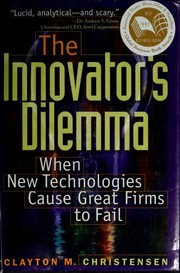
The Innovator's Dilemma: The Revolutionary Book That Will Cha...
Explains why successful firms become vulnerable to change.

Antifragile: Things That Gain from Disorder
Provides the conceptual framework behind the article theme.
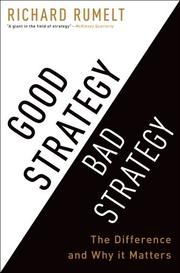
Good Strategy, Bad Strategy
Helps explain the strategic reset that followed the crisis.

Brick by Brick: How LEGO Rewrote the Rules of Innovation and...
Directly covers the early-2000s crisis and turnaround.
eBay marketplace picks
Marketplace Samples
Topic-anchored marketplace searches for visual, collectible, or second-hand items related to this page.


Endnotes
1.
Source: lego.com
Title: Annual Report 2003 ENG
Link:https://www.lego.com/cdn/cs/aboutus/assets/blte6c97bc4718a1848/Annual_Report_2003_ENG.pdf
2.
Source: designblog.uniandes.edu.co
Title: harvardbusinessreview lego
Link:https://designblog.uniandes.edu.co/blogs/dise2102pc/files/2013/08/harvardbusinessreview_lego.pdf
3.
Source: lego.com
Title: Annual Report 2004 ENG
Link:https://www.lego.com/cdn/cs/aboutus/assets/blt07abb4b8a3da3f39/Annual_Report_2004_ENG.pdf
4.
Source: lego.com
Title: Annual Report 2005 ENG
Link:https://www.lego.com/cdn/cs/aboutus/assets/blt6eacf5a8b7af1359/Annual_Report_2005_ENG.pdf
5.
Source: bcg.com
Title: Global Growth and Culture: Jorgen Vig Knudstorp Interview | BCG
Link:https://www.bcg.com/publications/2017/people-organization-jorgen-vig-knudstorp-lego-growth-culture-not-kid-stuff
6.
Source: lego.com
Title: Annual Report 2007 ENG
Link:https://www.lego.com/cdn/cs/aboutus/assets/bltd2f21c606528791c/Annual_Report_2007_ENG.pdf
7.
Source: blackstone.com
Title: major new force in european leisure as blackstone acquires legoland
Link:https://www.blackstone.com/news/press/major-new-force-in-european-leisure-as-blackstone-acquires-legoland/
8.
Source: d3.harvard.edu
Title: the missing piece how lego found open innovation at a critical time
Link:https://d3.harvard.edu/platform-rctom/submission/the-missing-piece-how-lego-found-open-innovation-at-a-critical-time/
9.
Source: d3.harvard.edu
Title: rebuilding lego
Link:https://d3.harvard.edu/platform-rctom/submission/rebuilding-lego/
10.
Source: hbsp.harvard.edu
Title: F0901F PDF ENG
Link:https://hbsp.harvard.edu/product/F0901F-PDF-ENG
11.
Source: strategosinstitute.com
Title: LEG O®
Link:https://www.strategosinstitute.com/uploads/cf17cf06ff987718f7a8d8edfb65bc2e6abe59cb33bfd8b079f41b20964e04af.pdf
Additional References
12.
Source: youtube.com
Title: Case Study: The Lego 10 Year Turnaround
Link:https://www.youtube.com/watch?v=JfhcNk6LWAk
Source snippet
The rise and fall of LEGO: From near bankruptcy to the world's largest toy company...
13.
Source: cfocentre.com
Link:https://www.cfocentre.com/sg/true-toy-story-legos-incredible-turnaround-tale-2/
14.
Source: perenews.com
Link:https://www.perenews.com/blackstone-closes-in-on-legoland/
15.
Source: amazon.co.uk
Link:https://www.amazon.co.uk/Brick-Rewrote-Innovation-Conquered-Industry/dp/0307951618
16.
Source: amazon.com
Link:https://www.amazon.com/Brick-Rewrote-Innovation-Conquered-Industry/dp/030795160X
17.
Source: facebook.com
Link:https://www.facebook.com/groups/KAMNext/posts/2583204418400948/
18.
Source: medium.com
Link:https://medium.com/%40anshi.gupta2002/how-lego-clicked-back-into-place-1185e3c2a09c
19.
Source: linkedin.com
Link:https://www.linkedin.com/posts/erikkruger_how-legos-darkest-moment-became-its-greatest-activity-7455613228518342656-VQ55
20.
Source: hbr.org
Link:https://hbr.org/2009/09/innovating-a-turnaround-at-lego
21.
Source: linkedin.com
Link:https://www.linkedin.com/posts/everyonecaninnovate_afol-legoseriouslpay-lego-activity-7422382077158834177-bi9I
Topic Tree
Follow this branch
Parent topic
LEGO AntifragilityRelated pages 14
- Adult Sets Why Adults Became Central to LEGO Growth
- Brick System Why the Brick Became LEGO's Best Constraint
- Complexity When More LEGO Products Made LEGO Weaker
- Digital Play Can LEGO Adapt Without Losing the Brick?
- Failed Bets What LEGO's Failed Bets Taught the Company
- Fan Signals How LEGO Fans Became a Market Sensor
- Framework Is LEGO Really Antifragile or Just Resilient?
- Governed Bets How LEGO Learned To Make Safer Bets
- +6 more in sidebar