Within Framework
Why LEGO's Expansion Made It Fragile
LEGO's move into scattered non-core ventures made the company harder to manage and more exposed when demand shifted.
On this page
- How non core ventures stretched the brand
- Why complexity amplified financial stress
- What Taleb's fragility lens explains about the damage
Page outline Jump by section
Introduction
LEGO’s crisis in the late 1990s and early 2000s is often described as a failure of strategy, but through Nassim Nicholas Taleb’s fragility lens it was more specifically a failure of complexity. The company expanded far beyond its core brick system into theme parks, clothing, media projects, video games, publishing, watches and experimental toy lines. Many of these ventures generated revenue, yet together they created a business that became harder to understand, more expensive to operate and increasingly vulnerable when consumer demand shifted. By 2003, LEGO was reporting historic losses and facing a severe cash crisis.[IMD Business School]imd.orgIMD Business SchoolInnovation at the LEGO Group (A) - IMD Business SchoolIn 2003, the LEGO Group had a number of positive attributes: it…
 Taleb argues that fragile systems often appear successful while conditions remain favourable, but hidden weaknesses accumulate beneath the surface. LEGO’s expansion illustrates this pattern. The problem was not merely that some new ventures failed. The deeper issue was that diversification multiplied operational complexity faster than the company’s ability to manage it.
How Non-Core Ventures Stretched the Brand
During the 1990s, LEGO concluded that traditional construction toys faced growing competition from video games, digital entertainment and changing play habits. In response, the company expanded aggressively into businesses that extended the LEGO name but often moved away from the logic of the brick system itself. These included theme parks, clothing, books, television projects, software, retail experiments and a growing number of licensed products.[Knowledge at Wharton]knowledge.wharton.upenn.eduKnowledge at Wharton Innovation Almost Bankrupted LEGOKnowledge at WhartonInnovation Almost Bankrupted LEGO - Until It Rebuilt with a…18 Jul 2012 — After years of booming sales followed by…
From a conventional growth perspective, the strategy looked sensible. A powerful brand could theoretically support multiple revenue streams. The fragility emerged because many of these ventures required capabilities that LEGO did not possess.
The company suddenly had to manage:
- Theme park operations.
- Media and entertainment projects.
- Apparel licensing.
- Software development.
- Retail expansion.
- Increasingly complex product partnerships.
Each business introduced different risks, cost structures and management demands. Instead of reinforcing the core brick ecosystem, many initiatives competed for attention, capital and leadership focus. Former CEO Jørgen Vig Knudstorp later described the turnaround partly as removing activities in which LEGO lacked genuine expertise. The company eventually sold its LEGOLAND park ownership and withdrew from several non-core activities.[The Guardian]theguardian.comThe GuardianHow Lego clicked: the super brand that reinvented itself4 Jun 2017 — Vig Knudstorp rescued Lego by methodically rebuilding it…
Taleb’s framework helps explain why this mattered. Fragile organisations often mistake expansion for strength. In reality, every new dependency creates another potential point of failure. The more unrelated systems become attached to the business, the more ways volatility can damage it.
Why Complexity Amplified Financial Stress
The most dangerous consequence of over-diversification was not brand dilution alone. It was operational complexity.
As LEGO pursued more specialised products and licensed themes, the number of unique elements exploded. Reports on the company’s crisis period describe the product portfolio growing to roughly 13,000 distinct elements, creating enormous manufacturing and inventory burdens.[Atlantic International University]aiu.eduKnudstorp began pruning the company's product lines, cutting nearly half of its elements…Read more…[The Guardian]theguardian.comThe GuardianHow Lego clicked: the super brand that reinvented itself4 Jun 2017 — Vig Knudstorp rescued Lego by methodically rebuilding it…
This created several reinforcing problems:
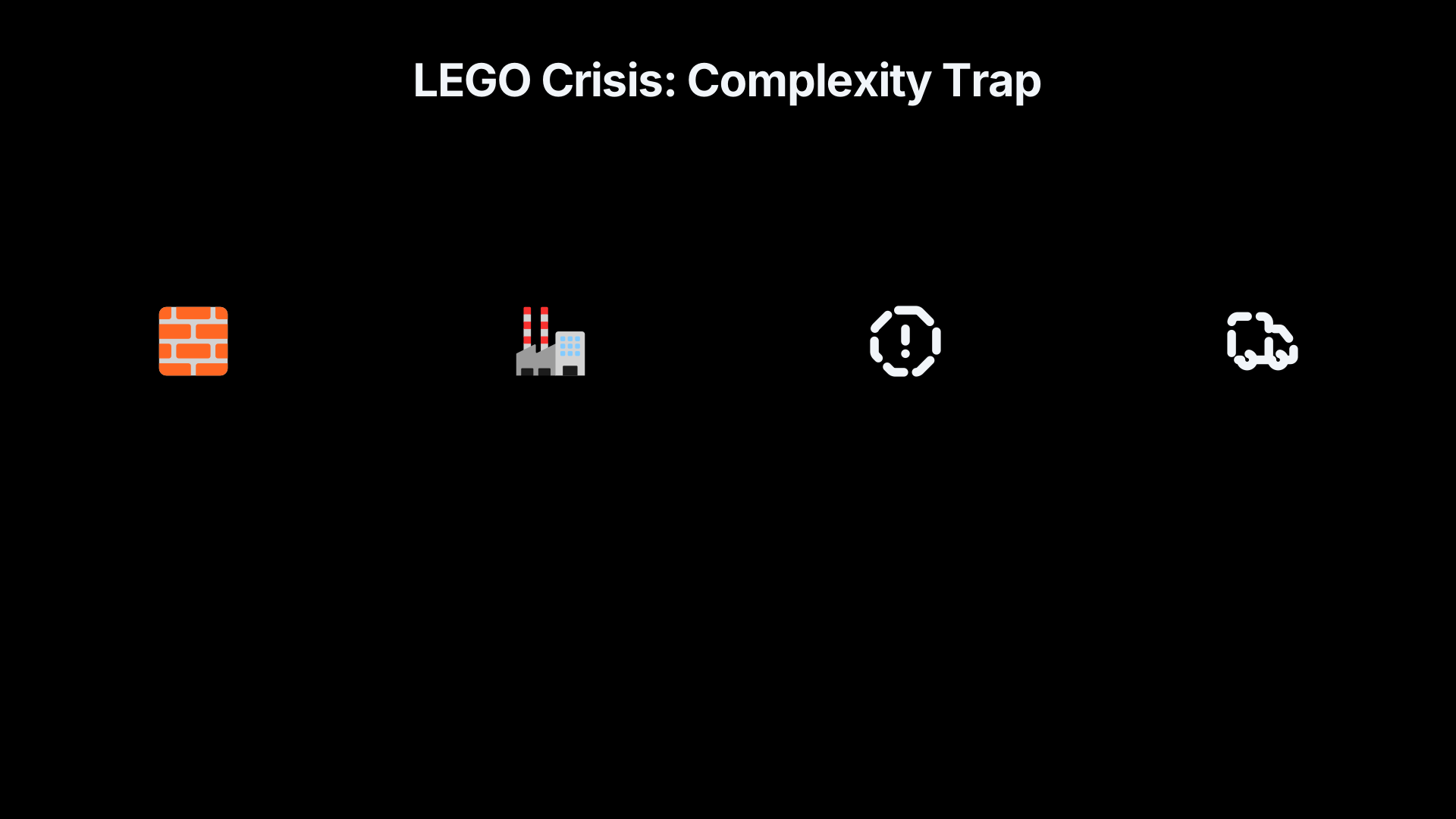
Higher production costs. New moulds, colours and specialised pieces required additional investment and manufacturing complexity.
Inventory risk. More unique parts meant larger stocks of components that could become obsolete if a product line underperformed.
Supply-chain strain. The company had to coordinate a vastly larger network of suppliers and production processes. One account noted that LEGO’s supplier base had become extraordinarily large relative to the company’s size.[Course Hero]coursehero.comCourse Hero[Solved] LEGO GROUP: AN OUTSOURCING JOURNEY…Oct 4, 2022 — This act of diversification had resulted in vast complexity and i…
Reduced visibility into profitability. As complexity increased, management struggled to identify which products actually generated profit. Accounts of the turnaround period note that LEGO lacked detailed profitability information for many product lines and sometimes did not fully understand the cost structure of individual products.[historyforoperators.substack.com]historyforoperators.substack.comthe lego turnaroundHow LEGO Nearly Collapsed - History for OperatorsJune 22, 2025 — Astonishingly, in the early 2000s LEGO lacked basic product profitabilit…
In Taleb’s terms, the business developed hidden fragilities. Small forecasting errors could produce disproportionately large financial consequences because the system had become so interconnected and difficult to monitor.
A simple brick-based business can absorb some mistakes. A sprawling network of specialised products, licensing deals and non-core ventures becomes far less forgiving.
When Demand Shifts Become Dangerous
Fragility becomes visible when conditions change.
The toy market was evolving rapidly during the late 1990s and early 2000s. Digital entertainment was expanding, consumer tastes were becoming less predictable and competition was intensifying. These changes did not merely reduce LEGO’s sales. They exposed weaknesses that had accumulated during the expansion period.[IMD Business School]imd.orgIMD Business SchoolInnovation at the LEGO Group (A) - IMD Business SchoolIn 2003, the LEGO Group had a number of positive attributes: it…
Because LEGO had spread resources across many initiatives, it had fewer buffers when demand weakened. Capital was tied up in ventures that required ongoing investment. Management attention was divided. Manufacturing systems were already burdened by excessive variety.
This helps explain why the downturn became so severe. By 2003, LEGO was losing large amounts of money and carrying substantial debt. What might have been a manageable market challenge became an existential threat because the company had reduced its ability to adapt quickly.[The Strategy Institute]thestrategyinstitute.orgThe Strategy InstituteFrom Bankruptcy to Billions: Lego's Blueprint for Business…11 Nov 2025 — In 2003, Lego was hemorrhaging money at…[IMD Business School]imd.orgIMD Business SchoolInnovation at the LEGO Group (A) - IMD Business SchoolIn 2003, the LEGO Group had a number of positive attributes: it…
Taleb argues that fragile systems suffer from non-linear harm: losses accelerate faster than expected once stress exceeds a certain threshold. LEGO’s experience fits this pattern. The company did not decline gradually. Instead, years of accumulated complexity suddenly translated into a crisis severe enough that analysts openly discussed bankruptcy.[IMD Business School]imd.orgIMD Business SchoolInnovation at the LEGO Group (A) - IMD Business SchoolIn 2003, the LEGO Group had a number of positive attributes: it…
A Concrete Example: Products That Drifted Away from the Brick
One revealing feature of the period was LEGO’s experimentation with products that moved away from the traditional brick system.
The 2002 Galidor line is frequently cited as an example. Inspired by action-figure trends, it abandoned much of the classic construction logic that defined LEGO’s identity. The theme was poorly received and became associated with the company’s broader strategic troubles.[Wikipedia]WikipediaSource details in endnotes.
Galidor was not dangerous because of one failed product launch. Companies can survive unsuccessful products. The deeper issue was that it reflected a pattern of pursuing growth opportunities that weakened the coherence of the overall system.
Taleb’s framework emphasises that robust systems benefit from strong organising principles. LEGO’s historic strength came from a modular brick platform where pieces worked together across generations. Products like Galidor represented a move away from that architecture toward isolated bets that lacked the same network effects.
The more LEGO expanded into disconnected experiments, the less advantage it gained from the qualities that had originally made the business durable.

What Taleb’s Fragility Lens Explains About the Damage
Traditional business analysis often describes LEGO’s crisis as overexpansion. Taleb’s fragility framework identifies a more precise mechanism.
The company became vulnerable because it increased complexity faster than it increased knowledge.
Several warning signs fit Taleb’s conception of fragility:
- Growth depended on assumptions that consumer demand would remain favourable.
- Costs became harder to measure and predict.
- More business units created more hidden interdependencies.
- Failures in one area could spread financial pressure elsewhere.
- Managers had less visibility into the system as a whole.
- The organisation required stable conditions to function efficiently.
In a fragile system, volatility is an enemy because surprises reveal weaknesses that complexity has concealed. LEGO’s losses in the early 2000s exposed exactly this dynamic. The company’s famous brand created the appearance of strength, yet underneath it had become dependent on an increasingly unwieldy structure.[BCG Global]bcg.compeople organization jorgen vig knudstorp lego growth culture not kid stuffBCG GlobalAt LEGO, Growth and Culture Are Not Kid Stuff9 Feb 2017 — In this interview, conducted in his final days as CEO, the 48-year-ol…
The later turnaround was significant not because LEGO simply cut costs, but because it removed layers of fragility. Reducing product complexity, exiting non-core businesses and refocusing on the brick system reduced the number of ways the company could fail. That shift moved LEGO away from a fragile structure and toward a model that could better absorb shocks without collapsing.[The Guardian]theguardian.comThe GuardianHow Lego clicked: the super brand that reinvented itself4 Jun 2017 — Vig Knudstorp rescued Lego by methodically rebuilding it…[Atlantic International University]aiu.eduKnudstorp began pruning the company's product lines, cutting nearly half of its elements…Read more…
Amazon book picks
Further Reading
Books and field guides related to Why LEGO's Expansion Made It Fragile. Use these as the next step if you want deeper reading beyond the article.

Antifragile: Things That Gain from Disorder
Supports the diversification argument behind decor-driven growth.
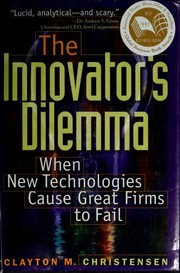
The Innovator's Dilemma: The Revolutionary Book That Will Cha...
Examines strategic mistakes that can weaken successful firms.
eBay marketplace picks
Marketplace Samples
Topic-anchored marketplace searches for visual, collectible, or second-hand items related to this page.


Endnotes
1.
Source: imd.org
Link:https://www.imd.org/research-knowledge/strategy/case-studies/innovation-at-the-lego-group-a/
Source snippet
IMD Business SchoolInnovation at the LEGO Group (A) - IMD Business SchoolIn 2003, the LEGO Group had a number of positive attributes: it...
2.
Source: historyforoperators.substack.com
Title: the lego turnaround
Link:https://historyforoperators.substack.com/p/the-lego-turnaround
Source snippet
How LEGO Nearly Collapsed - History for OperatorsJune 22, 2025 — Astonishingly, in the early 2000s LEGO lacked basic product profitabilit...
Published: June 22, 2025
3.
Source: bcg.com
Title: people organization jorgen vig knudstorp lego growth culture not kid stuff
Link:https://www.bcg.com/publications/2017/people-organization-jorgen-vig-knudstorp-lego-growth-culture-not-kid-stuff
Source snippet
BCG GlobalAt LEGO, Growth and Culture Are Not Kid Stuff9 Feb 2017 — In this interview, conducted in his final days as CEO, the 48-year-ol...
4.
Source: Wikipedia
Link:https://en.wikipedia.org/wiki/Galidor
5.
Source: artofthebrand.substack.com
Title: the near bankruptcy to 9b how lego
Link:https://artofthebrand.substack.com/p/the-near-bankruptcy-to-9b-how-lego
Source snippet
Near-Bankruptcy to $9B: How LEGO Saved Itself by...The clothing line, video games, and theme parks individually lost money while collect...
6.
Source: imd.org
Link:https://www.imd.org/ibyimd/videos/ceo-dialogue-series/lessons-from-lego-group-assembling-the-bricks-to-grow-in-a-crisis/
Source snippet
, former LEGO Group CEO Jørgen Vig Knudstorp offered valuable insights for executives...
7.
Source: knowledge.wharton.upenn.edu
Title: Knowledge at Wharton Innovation Almost Bankrupted LEGO
Link:https://knowledge.wharton.upenn.edu/article/innovation-almost-bankrupted-lego-until-it-rebuilt-with-a-better-blueprint/
Source snippet
Knowledge at WhartonInnovation Almost Bankrupted LEGO - Until It Rebuilt with a...18 Jul 2012 — After years of booming sales followed by...
8.
Source: theguardian.com
Link:https://www.theguardian.com/lifeandstyle/2017/jun/04/how-lego-clicked-the-super-brand-that-reinvented-itself
Source snippet
The GuardianHow Lego clicked: the super brand that reinvented itself4 Jun 2017 — Vig Knudstorp rescued Lego by methodically rebuilding it...
9.
Source: aiu.edu
Link:https://www.aiu.edu/innovative/from-the-brink-of-bankruptcy-how-lego-rebuilt-its-future-brick-by-brick/
Source snippet
Knudstorp began pruning the company's product lines, cutting nearly half of its elements...Read more...
10.
Source: coursehero.com
Link:https://www.coursehero.com/tutors-problems/Supply-Chain-Management/44700701-LEGO-GROUP-AN-OUTSOURCING-JOURNEY-PROLOGUE-The-last-five-years/
Source snippet
Course Hero[Solved] LEGO GROUP: AN OUTSOURCING JOURNEY...Oct 4, 2022 — This act of diversification had resulted in vast complexity and i...
11.
Source: thestrategyinstitute.org
Link:https://www.thestrategyinstitute.org/insights/from-bankruptcy-to-billions-legos-blueprint-for-business-transformation
Source snippet
The Strategy InstituteFrom Bankruptcy to Billions: Lego's Blueprint for Business...11 Nov 2025 — In 2003, Lego was hemorrhaging money at...
Additional References
12.
Source: linkedin.com
Link:https://www.linkedin.com/posts/pedro-vega-434b9327_in-2003-lego-nearly-collapsed-300m-losses-activity-7378443489543516161-ghC-
Source snippet
In 2003, LEGO nearly collapsed - $300M losses....In 2003, LEGO nearly collapsed - $300M losses. Bankruptcy imminent. Then they pulled of...
13.
Source: hbr.org
Link:https://hbr.org/2009/01/lego-ceo-jorgen-vig-knudstorp-on-leading-through-survival-and-growth
14.
Source: linkedin.com
Link:https://www.linkedin.com/posts/shelestak_in-2003-lego-was-losing-1-million-a-day-activity-7432788787757416448-yIBt
Source snippet
Lego's 2003 Crisis: Cutting Complexity to Save the BrandIn 2003, Lego was losing $1 million a day. The world's most famous toy brand had...
15.
Source: platform01consulting.com
Title: lego one of the greatest turnaround stories in corporate history
Link:https://platform01consulting.com/lego-one-of-the-greatest-turnaround-stories-in-corporate-history/
Source snippet
LEGO: One of the Greatest Turnaround Stories In...13 Aug 2023 — By the year 2003, Lego was encountering major difficulties.Sales had dec...
16.
Source: newsletterbear.com
Link:https://newsletterbear.com/how-lego-turned-near-bankruptcy-into-a-5-4b-global-empire/
Source snippet
Learn the strategic subtraction blueprint to eliminate complexity, increase profit...Read more...
17.
Source: risingabovethenoise.com
Link:https://www.risingabovethenoise.com/the-lego-deletion-how-killing-50-of-their-business-led-to-a-7-6-billion-empire/
Source snippet
The LEGO Deletion: How Killing 50% of Their Business...In 2003, LEGO was losing $1 million per day and was approximately 90 days from ba...
18.
Source: markhub24.com
Title: lego strategic turnaround through innovation and focus
Link:https://www.markhub24.com/post/lego-strategic-turnaround-through-innovation-and-focus
Source snippet
LEGO: Strategic Turnaround Through Innovation and FocusDec 15, 2025 — LEGO Group faced near-bankruptcy in 2003–2004 after years of uncont...
19.
Source: helpmegrow.co.uk
Title: the lego turnaround a masterclass in business revival
Link:https://helpmegrow.co.uk/the-lego-turnaround-a-masterclass-in-business-revival/
Source snippet
Help Me Grow Business CoachingThe LEGO Turnaround: A Masterclass in Business RevivalDec 11, 2024 — LEGO's remarkable turnaround offers va...
20.
Source: linkedin.com
Title: leadesrship jorgen knudstorp example ndudi nwabueze
Link:https://www.linkedin.com/pulse/leadesrship-jorgen-knudstorp-example-ndudi-nwabueze
Source snippet
LEADESRSHIP: JORGEN KNUDSTORP EXAMPLEHowever, the late 1990s saw Lego going into crisis as expansion and diversification strained the com...
21.
Source: youtube.com
Title: Rebuilding the Brick: LEGO’s Journey From Crisis to Sust AInnovation
Link:https://www.youtube.com/watch?v=jWxK-LVSGHg
Source snippet
The Business Mistakes That Nearly Killed Lego provides an expert breakdown of how the company’s push into non-core ventures, such as them...
Topic Tree